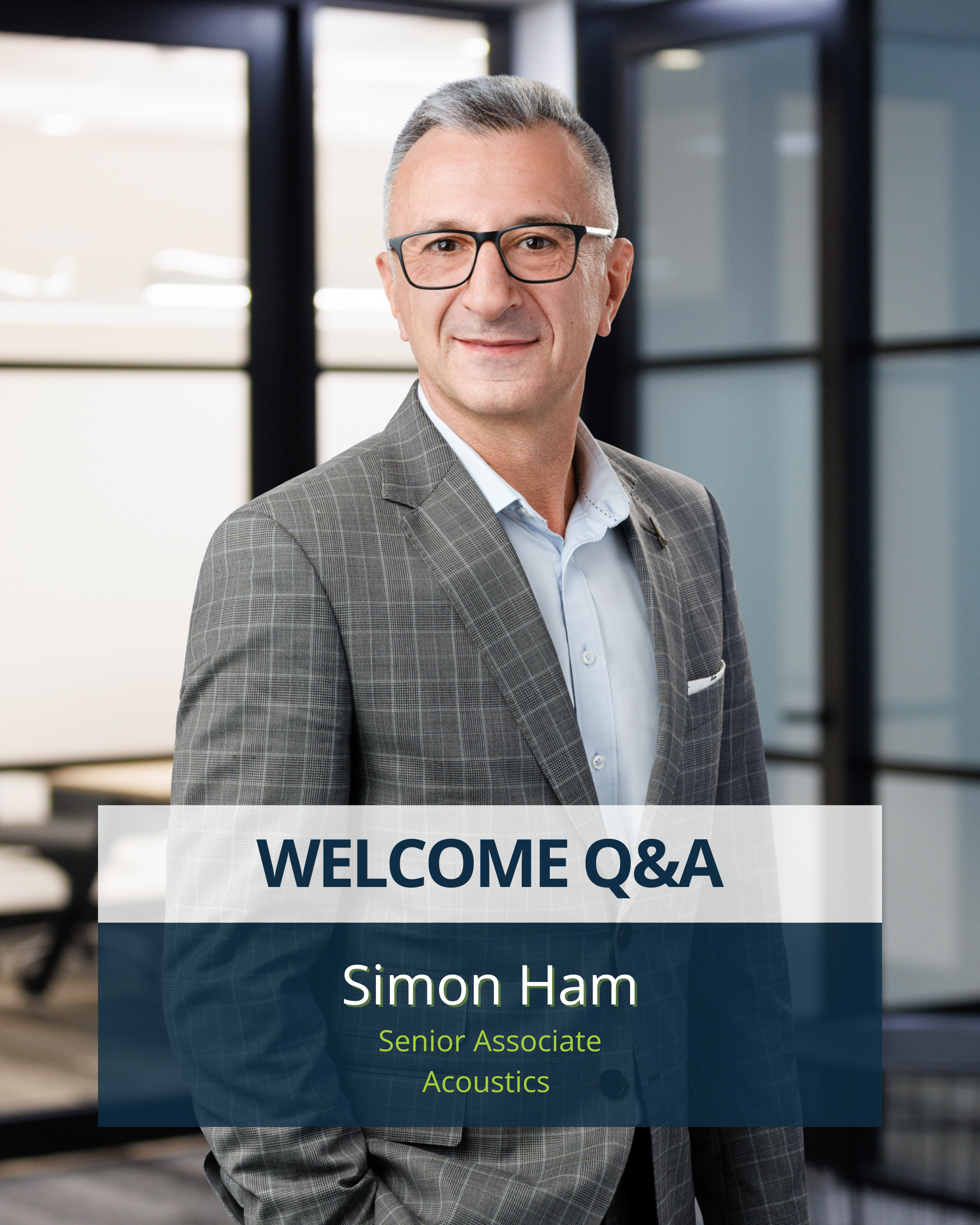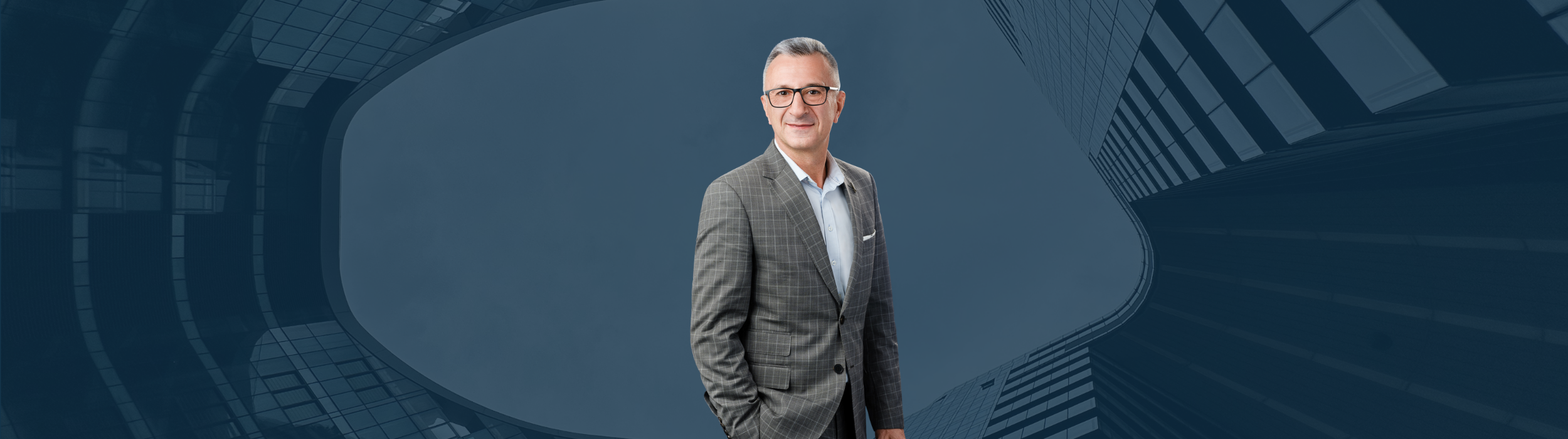
We're pleased to welcome Simon Ham, Senior Associate – Acoustics, to #TeamBSE!
With more than 26 years of experience in acoustic consulting across the UK, Europe, the Middle East, the Caribbean, and Australia, Simon brings global expertise, technical excellence, and a collaborative approach to our team.
We sat down with Simon to get to know him a little better, chatting about what attracted him to BSE, his career journey, some of the most challenging projects he's worked on, and what he enjoys outside of work.
Now, let's get into the Q&A with Simon.
What attracted you to BSE?
The enthusiasm and energy of the leadership, the sense of a joined-up company that thrives on delivery and excellence, combined with a small but growing business that has a family/community feel and is starting to break into new markets and bigger projects. This combination made me feel that my 26 years working globally in a Tier 1 company would enable me to provide value, knowledge, and experience to help build the BSE brand and skills.
What can clients expect when working with you?
Global-level knowledge and skills that you would expect from a Tier 1 global company, combined with local, approachable, and collaborative delivery.
Can you tell us more about your career?
I have worked in acoustic consulting since 1998, which, until joining BSE, was with a global company. Originally based in the UK, I have worked all over Europe, many parts of the Middle East, the Caribbean, and, since 2008, Australia. During that time, I also started two new acoustic teams, one in the UK and one in Brisbane.
I have delivered acoustic design for most building types, planning assessments, environmental assessments, and infrastructure (road, rail, and air) projects, from small projects to the very largest projects globally. I have also been a technical expert for legal cases and a subject matter expert/technical advisor on many large infrastructure projects.
What are some challenging projects you've worked on?
Greater London Authority Building, Goldman Sachs International, Channel Tunnel Rail Link (HS1), and Riyadh Metro.
How did you overcome these challenges?
The Greater London Authority Building is the council headquarters office, including a council chamber that had to be designed to BBC broadcast standards. The architect was Foster and Partners, and their vision was for an all-glass building to represent transparent politics. It was also round in plan and curved in section, which resulted in very acute acoustic focal points and non-compliance with the BBC broadcast standards. We developed a design that utilised the underside of the spiral staircase that traversed from the Mayor's office on the sixth floor through the chamber to the chamber floor to provide high-performing sound absorption, and strategically tilted the glazed panels forming the walls of the chamber to direct sound reflections at it.
The Goldman Sachs International work started out as a peer review of another consultant's façade acoustic specification and evolved into providing acoustic services to all of the European offices for refurbishments and new builds. It further evolved again in my key account holder role, incorporating additional services including mechanical services, electrical services, structural engineering, façade engineering, advanced analytics, and project management. The biggest challenge was delivering multiple projects occurring simultaneously across multiple countries, while ensuring they were all completed to the exceptionally high quality required to meet the client's expectations.
The Channel Tunnel Rail Link project was Europe's largest project at the time, with some particularly unique challenges, such as noise emissions from large ducts necessarily containing dampers and grilles that were located as close as 12 metres from somebody's bedroom window and would have air passing through them at up to 65 metres per second. These air velocities extend well beyond conventional mechanical services duct noise prediction methodologies and required the development of prediction methodologies that incorporated jet theory to resolve them. The project also required the design of a highly resilient track system, softer than any previously applied to a high-speed rail system, given the shallow level of the tunnel under houses on approach to the portals. An approach was developed based on the incremental development of approved systems by changing the pad under the sleeper to a softer pad, then testing it in a test rig to replicate 6 million rail pass-bys to verify performance and durability. It passed, however, it was noted that, under lateral load through corners, compliance with the vibration mitigation requirements failed. Hence, a further evolution was developed that introduced differing-length ribs to the pads that lined the sides of the sleeper to control lateral sleeper placement, with longer ribs being soft, and shorter ribs being stiff and acting as the safety stop for the sleeper to keep lateral movement within acceptable limits. The revised design worked under all lateral loads expected in the project's use when tested in the test rig, and also complied with the project vibration specification.
The Riyadh Metro project was challenging in both scale and the need to deliver a consistent consultancy service. The project was the largest in the world delivered in a single phase, consisting of 176 km of new metro railway spanning six metro lines, including 85 stations, all built from scratch. Delivery of the acoustic design involved working with design teams across time zones from Australia through Asia, the Middle East, Europe, and even Toronto.
What's Simon like outside of work?
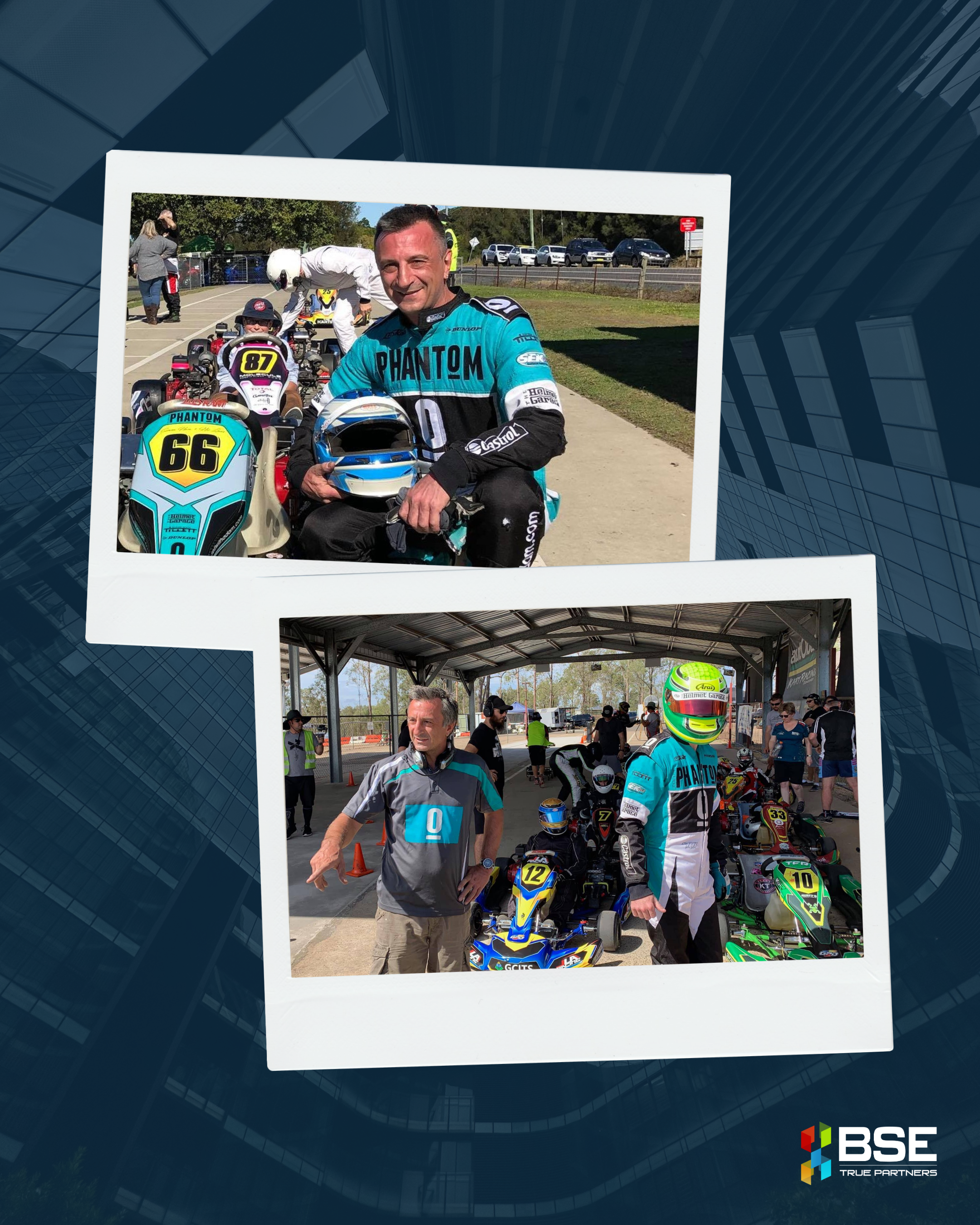
Outside of work, I am passionate about motorsport, actively participating in endurance kart racing events, running my own team, and maintaining the kart. I also have a volunteer role as the President of the Sportsman Enduro Karting Club Queensland (SEKQLD), which organises endurance karting events, and have done so since 2018. When I'm not busy with motorsport activities, I like to socialise with friends, ride my motorbike or jet ski when conditions are good, and, when the chance permits (nowhere near often enough), I like to go to the snow for a bit of skiing.